
Transfer types, atolls, house reefs, water villas versus beach bungalows and what it all costs. The Maldives has more moving parts than most holidays, so here's the honest, unrushed version.
The Maldives isn't one destination, it's roughly 1,200 tiny coral islands spread across 26 atolls in the Indian Ocean, and almost everyone who stays there is on a single private island resort rather than moving around. That's what makes it different to book: you're not choosing a town or a region, you're choosing one specific island, and that one choice decides your transfer, your reef, your food and pretty much everything else about your holiday.
It's genuinely one of the most relaxing holidays you can book, but it isn't a cheap one, and a lot of the cost differences between resorts come down to things that aren't obvious from the brochure photos: how far the island is from the airport, whether it has a decent reef on its own doorstep, and whether you're paying resort prices for every drink and snack or it's all wrapped into your package.
Tell me your budget and what you actually want out of the trip (snorkelling on the doorstep, total seclusion, a family-friendly island with kids' clubs) before you fall in love with a hotel's photos. Two resorts that look identical in a brochure can have completely different transfers, reefs and real-world costs.
Most people go for 7 nights, and that's about right: long enough to properly switch off, short enough that the cost of getting there feels worth it. Anything under 5 nights starts to feel like a lot of travelling for not much time on the island, given the flight alone is around 10 to 11 hours each way from the UK, plus a transfer at the other end.
It suits couples and honeymooners best, and the Maldives leans heavily into that market, but plenty of resorts do family holidays well too, with kids' clubs, family villas and shallow lagoons that are genuinely safer for children than open sea. It's not really a destination for a lively, sociable group trip, most resorts are quiet and adult-paced by design.
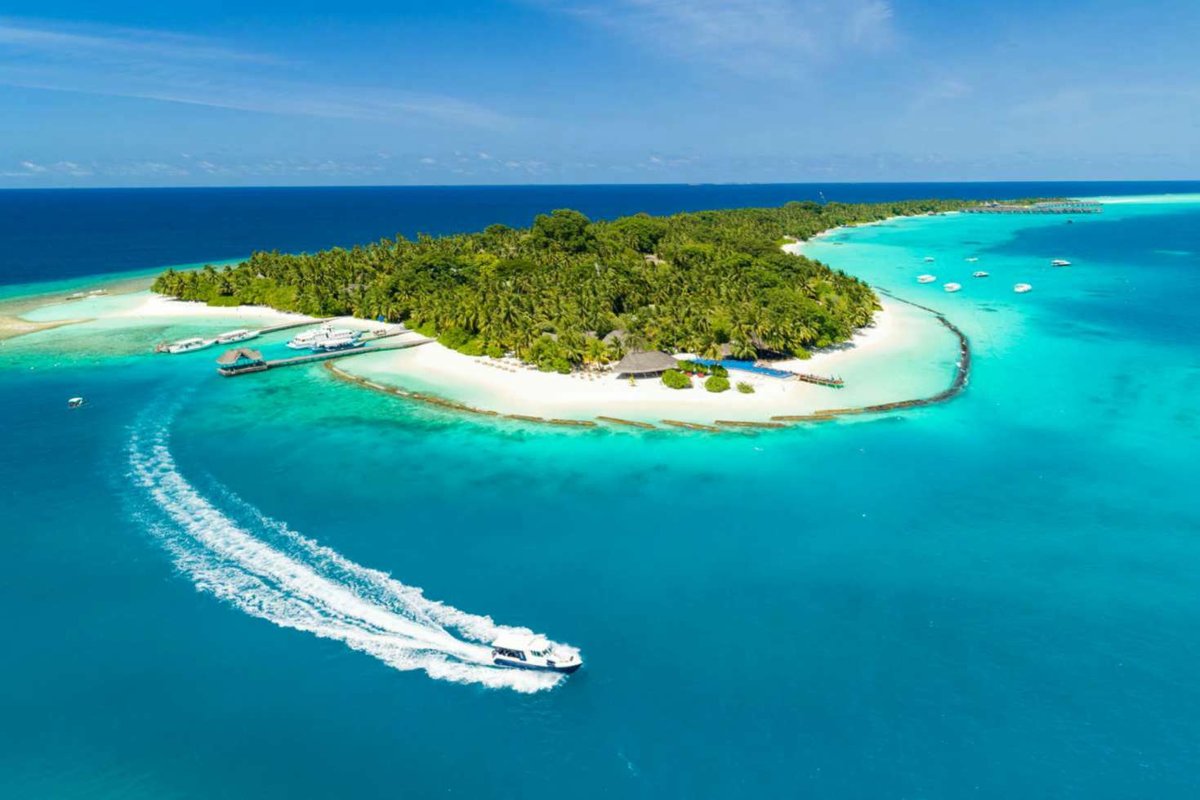
Every trip starts at Velana International Airport, on a small island next to the capital, Male. From there, how you reach your resort depends entirely on how far away it is, and this is where a big chunk of your holiday cost can hide.
For resorts within about 50 miles of the airport. Runs day and night at most resorts, journey time is typically 15 minutes to just over an hour. Roughly £80 to £390 per person, return.
For resorts further out, roughly 50 to 155 miles away. Daylight hours only, usually landing between around 6am and 4pm, so a late flight in can mean an overnight in Male first. Journey time 20 to 70 minutes in the air, but budget extra for check-in and waiting. Roughly £315 to £645 per person, return.
For the furthest southern atolls. A short domestic flight to a local airport, then a speedboat on to the resort. Around 2 to 2.5 hours door to door. Roughly £275 to £410 per person, return.
A far-flung resort can look cheaper per night, then the transfer more than makes up the difference. Always add the transfer cost in before comparing two resorts on price.
Children aged 2 to 11 usually get 30 to 40% off transfers, and under 2s often travel free or heavily discounted. Worth checking if you're booking as a family.
The Maldives is made up of natural coral atolls, ring-shaped clusters of reef and islands. Some resort islands sit right on the edge of a healthy natural reef that you can snorkel straight off the beach, known as the house reef. Others, particularly some of the newer or man-made islands, have little or no reef of their own, and you'd need a boat trip to see decent coral and marine life. If snorkelling matters to you, this is one of the most important things to check before booking, not something to assume comes as standard.
Baa Atoll and Gaafu Alifu Atoll are both known for having some of the healthiest, most reliable house reefs in the country, Baa Atoll is even a UNESCO Biosphere Reserve. As a general rule, older, more established resort islands tend to have better reefs than islands that have been recently built up or reshaped.
If a good house reef matters to you, ask me before you book. It's easy to miss on a brochure page and it makes a real difference to how much you get out of your days.
Almost every package holiday to the Maldives is on a resort island, an entire small island given over to a single hotel. But it's worth knowing the alternative exists, because it changes the budget conversation completely.
The whole island is the hotel. Private, polished and set up entirely around tourists, with alcohol freely available and swimwear fine anywhere on the island. This is what most people picture when they think "Maldives", and where the vast majority of package holidays are based. Expect to pay resort prices for everything not included in your package, often £350 to £650 per person, per day, all in.
Inhabited Maldivian islands with independent guesthouses, far cheaper and a genuinely local, lived-in feel. Alcohol isn't sold on local islands under Maldivian law, and modest dress is expected outside of a designated bikini beach. It's a completely different, more budget and adventure-focused trip, roughly £40 to £120 per person, per day.
Once you've picked a resort, this is usually the next big decision, and it's more about lifestyle than luxury, one isn't simply "better" than the other.
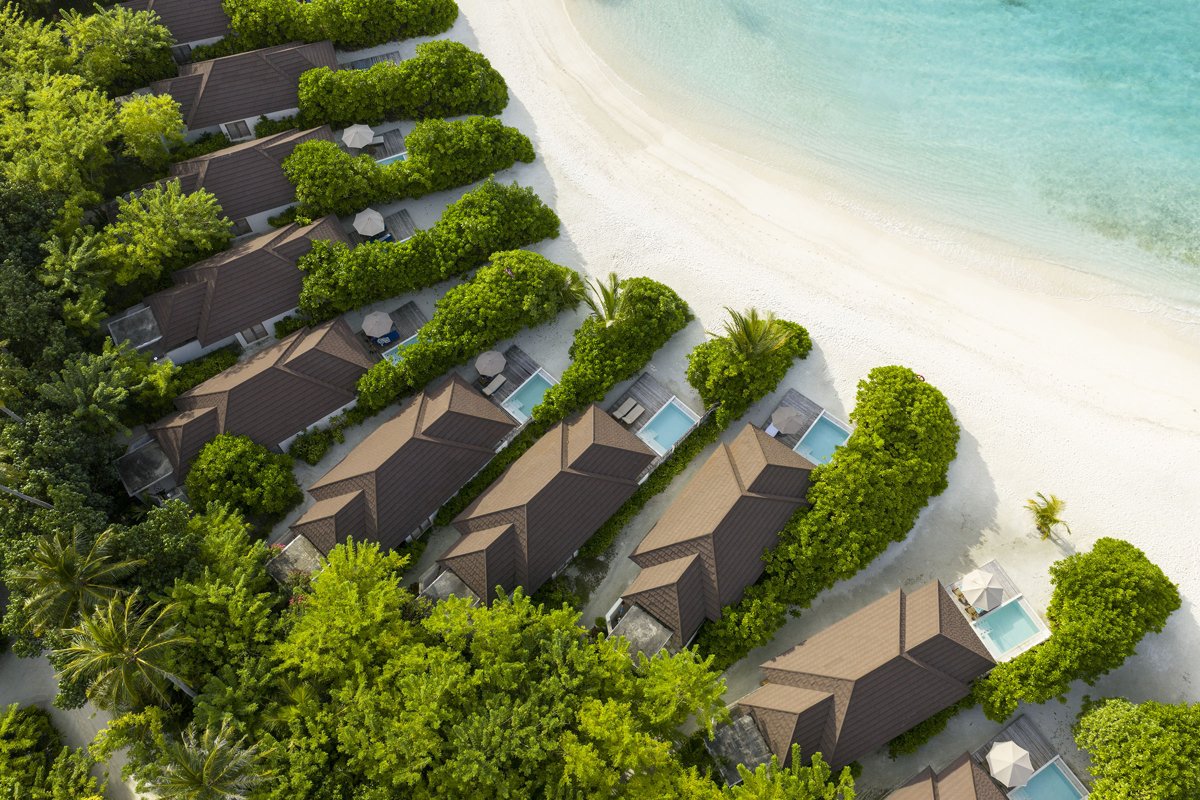
Set on land, usually with direct beach access and your own patch of sand. Better for families, easier for young children, usually closer to the restaurants and facilities, and generally the cheaper of the two. Downsides are less privacy, since other guests can walk past, and no glass-floor views of the water below you.
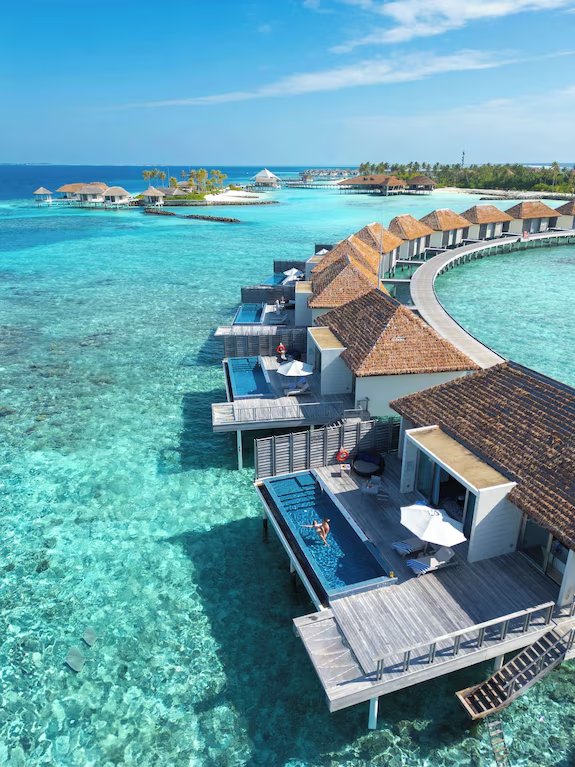
Built out over the lagoon on stilts, with steps straight down into the sea. The most private, most photogenic option, and usually where the snorkelling is best right off your own steps. Downsides are the price (a genuine step up), often being a longer walk from the restaurants and bars, and some resorts don't allow young children in them at all.
If it's your first trip and budget is a factor, a beach villa at a resort with a great house reef often gives you a better holiday than a water villa at a resort with a poor one. The villa type matters less than the reef underneath it.
The Maldives sits close to the equator, so temperatures barely move all year. What actually changes is rainfall, driven by two monsoon seasons. These are long-term averages, so treat them as a guide rather than a forecast for your specific dates.
| Month | Avg temp | Season | What to expect |
|---|---|---|---|
| January | 27 to 30°C | Dry (Iruvai) | Peak dry season, low rainfall |
| February | 28 to 31°C | Dry | Driest month, best underwater visibility |
| March | 28 to 31°C | Dry, ending | Still mostly dry, a little more rain creeping in |
| April | 28 to 32°C | Transitional | Warmest month, brief afternoon showers |
| May | 27 to 31°C | Wet (Hulhangu) begins | Southwest monsoon starts, rainfall increases |
| June | 27 to 30°C | Wet | Rainy with sunny spells, good surf swell |
| July | 27 to 30°C | Wet | Rain in bursts rather than all day |
| August | 27 to 30°C | Wet | Rain in bursts, shoulder-season rates start |
| September | 27 to 30°C | Wet, peak | The wettest month on average |
| October | 27 to 30°C | Wet, easing | Rain decreasing but still changeable |
| November | 27 to 30°C | Dry season begins | Rainfall dropping off through the month |
| December | 27 to 30°C | Dry | Dry and busy, especially over Christmas and New Year |
Figures are long-term monthly averages for the Maldives.
December to April is the dry season and the busiest, priciest time to go, especially over Christmas, New Year and February half term, when the best water villas get booked up months ahead. May to November is the wet season, but "wet" in the Maldives usually means short, heavy showers followed by sunshine rather than washed-out days, and it's when you'll find noticeably better prices and quieter resorts.
If you don't mind the odd shower and want the best value, aim for May, June, October or November. If you want the highest odds of wall-to-wall sunshine and don't mind paying for it, go between December and March.
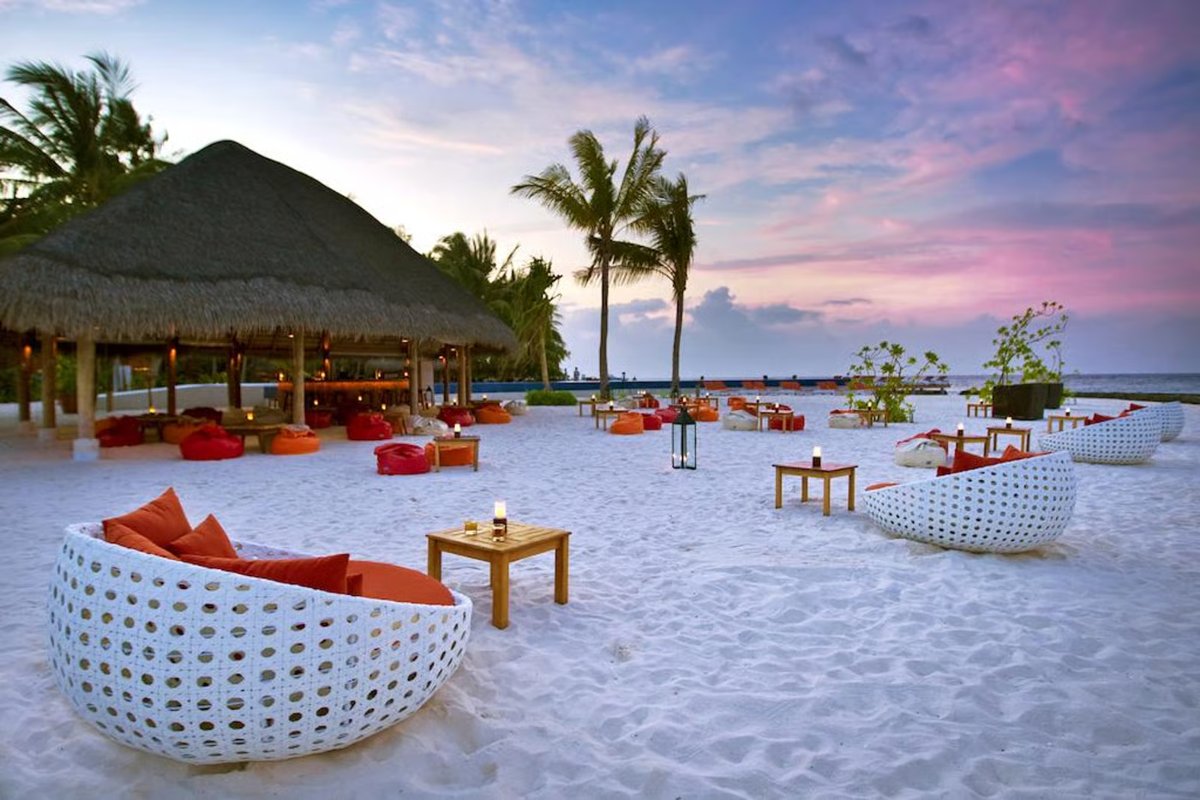
Most of your time is spent on the resort itself, but the best resorts also run excursions off the island, snorkelling trips, dolphin cruises and sandbank picnics among them. Here's a shortlist of the kind of bookable extras worth having on the radar.
Most excursions are also bookable directly through your resort's activities desk once you arrive, it's just worth knowing you're not limited to whatever's in the resort brochure.
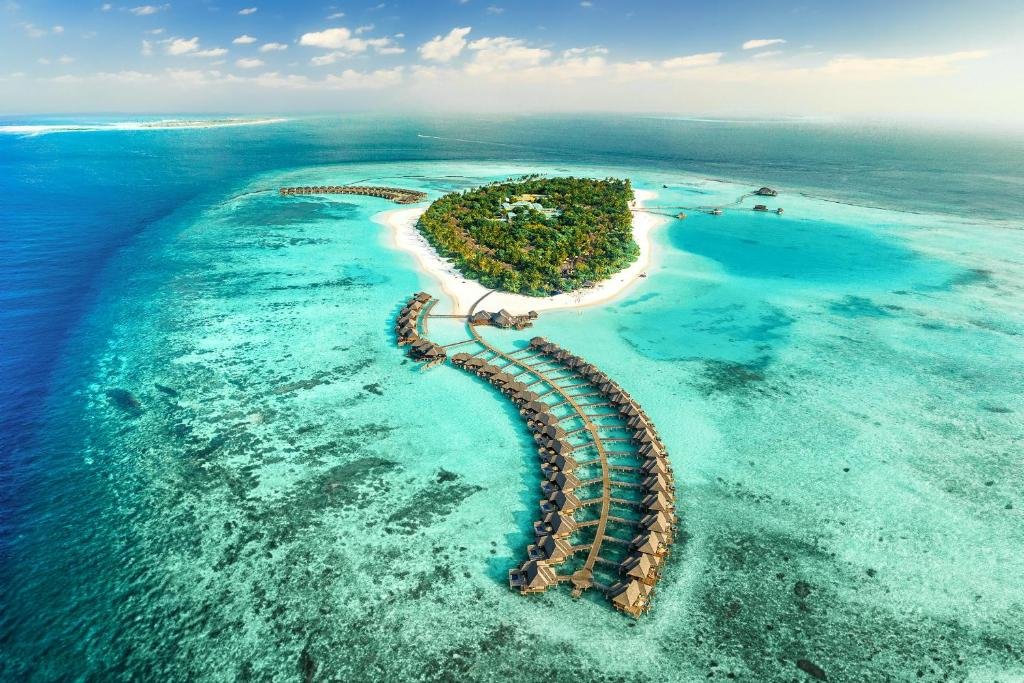
A spread across budgets, all well known, well reviewed names to give you a sense of the range on offer. I'll always match the actual resort to your budget and what you want out of the trip.
One of the larger, more established resort islands, with a wide spread of room categories and a relatively easy speedboat transfer. A solid, well-priced way into a first Maldives trip.
A large island with a genuinely good house reef, a huge range of room types from beach villas to overwater, and enough space and restaurants to suit couples and families alike.
A short, easy speedboat transfer from the airport, with kids' clubs, family villas and a shallow, sheltered lagoon that's genuinely well suited to younger children.
Barefoot luxury on a genuinely huge island with an excellent house reef, in a UNESCO Biosphere Reserve. Seaplane transfer, and priced accordingly, but it's one of the most highly regarded resorts in the country.
The Maldives is unusual: almost everything you'll spend happens inside your resort, priced in US dollars, and it's expensive compared with pretty much anywhere else in this part of the world. The table below shows everyday prices in Male and on local islands, useful context, but not what you'll pay on a resort island.
| Item | Typical price (Male / local islands) |
|---|---|
| Meal at an inexpensive restaurant | About £4.75 |
| Three course meal for two, mid-range restaurant | About £30.75 |
| Draft beer, pint (not sold on local islands) | About £3.85 |
| Cappuccino | About £2.80 |
| Bottled water | About £0.25 |
| Taxi, starting fare | About £1.55 |
Source: crowd-sourced averages via Numbeo, checked at time of writing. Maldivian rufiyaa to pound conversion is approximate and will move around.
On a resort island, expect a cocktail to run £15 to £25, a bottle of water £5 to £8, and an a la carte dinner £50 to £100+ per person. It adds up fast, which is exactly why half board, full board or all-inclusive is worth serious thought for the Maldives specifically.
The essentials, at a glance.
| Currency | Maldivian rufiyaa (MVR), but US dollars are widely accepted and often the default at resorts |
| Plug type | UK three-pin (type G) is standard, some resorts also have US-style sockets |
| Language | Dhivehi, with English spoken throughout the tourism industry |
| Flight time from the UK | About 10.5 to 11 hours direct |
| Time difference | 5 hours ahead of the UK in winter, 4 hours ahead during British summer time |
| Visa | Free 30-day tourist visa on arrival for UK passport holders |
I can find the right island for your budget and what you actually want out of the trip, honeymoon, family holiday or otherwise.